


"I'm Never Coming Back Here": A Portrait of Resilience
Entry Date:
July 2, 2026
Entry by:
Jimmy, Head of Tall Tales
Expedition:
Ascent
Remarks:
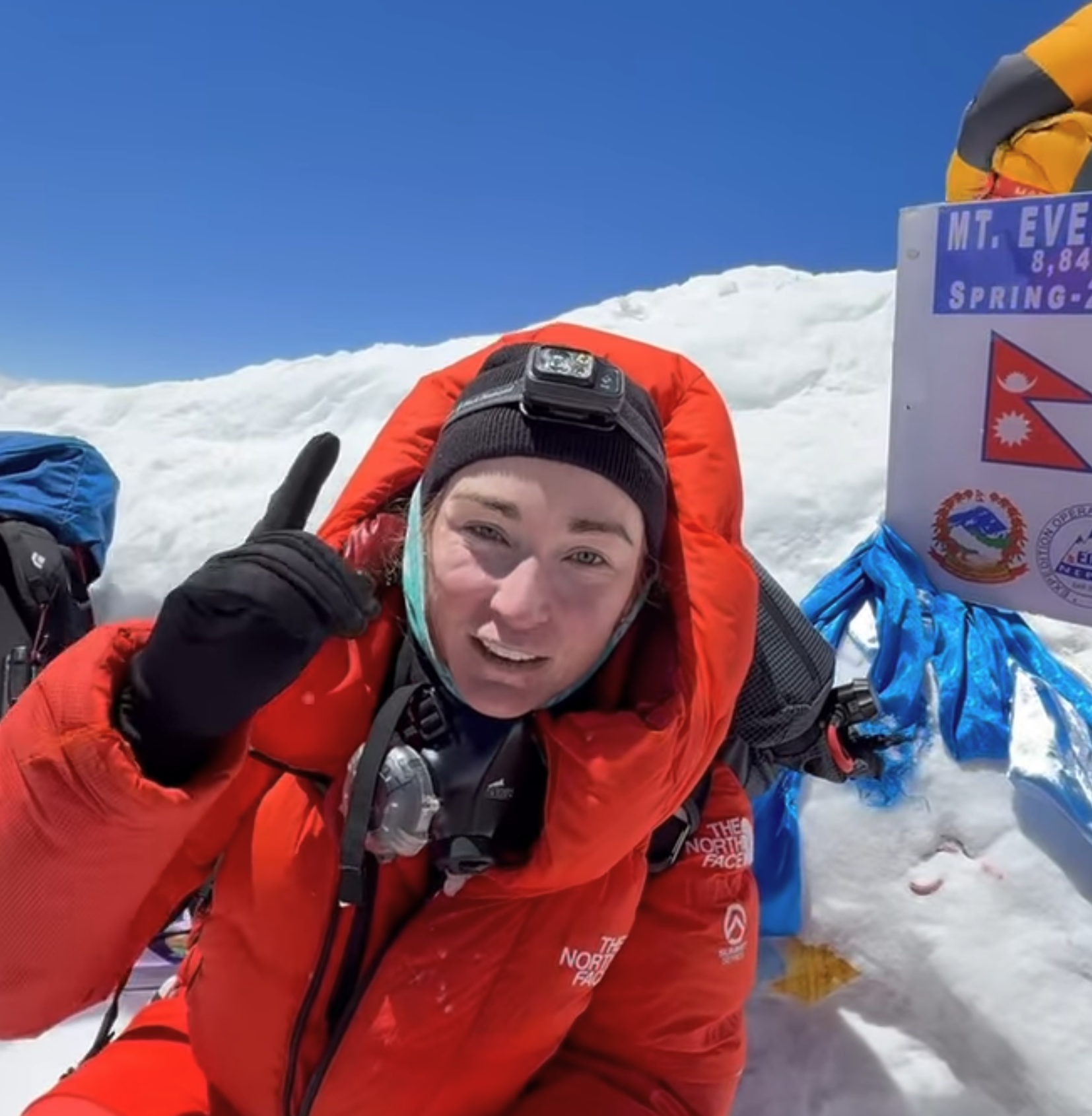
Some bottles of gin have a more interesting journey to your glass than others. Wildfire Ascent was made in collaboration with Sarah Armstrong — an Irish dentist, entrepreneur and mountaineer. A product born from a conversation in a kayak on the fjords of Greenland, and carried, quite literally, to the top of the world. On the 20th of May 2026, Sarah summited Mount Everest. This is the story of how she got there, and what it took to get back down.
There's a moment somewhere on the descent of Mount Everest where Sarah Armstrong told herself she was done.
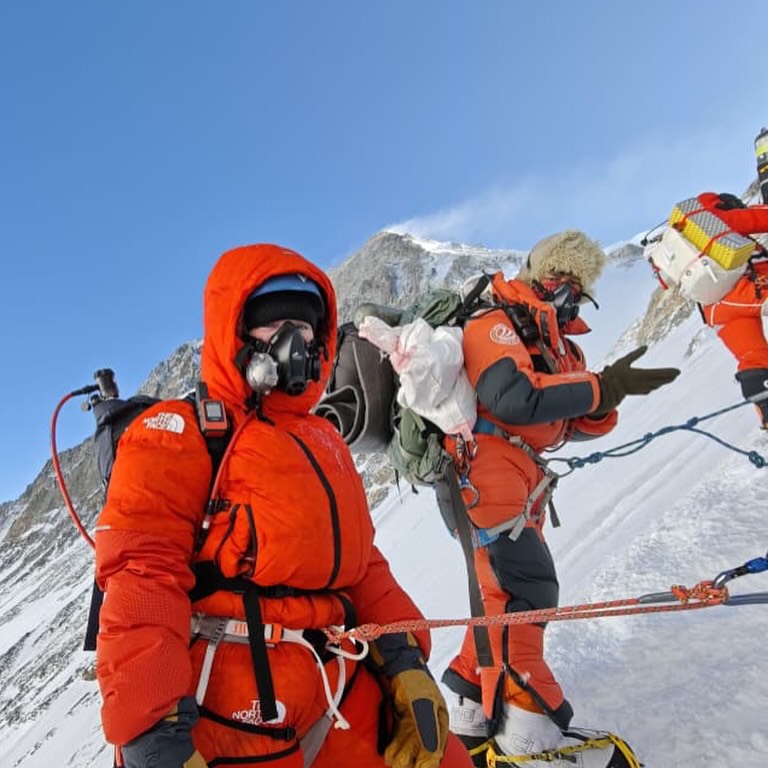
Not done with the mountain. She'd already summited, already uncorked a bottle of Wildfire Ascent at the true peak with Gelje Sherpa (the kind of call altitude convinces you is a good idea, and never one we'd recommend), already taken the photos, folded away the Irish tricolour and the flag of Cailin Finnegan she'd promised to carry. Done in the way your body decides for you, before your mind catches up. Oxygen gone. Legs failing mid-abseil. In and out of consciousness, hallucinating a red Teletubby (specifically Poe, the red one), who she later discovered was a real Sherpa in a red suit who had given her his own oxygen supply to get her moving again.
"I don't know how I did it for that length of time and kept going," she says now, back home in Ireland, fingers still recovering from frostbite. "I really don't know."
The Garage, the StairMaster, the Wall
What makes Sarah's story worth telling isn't just Everest. It's everything that had to be true about her before she ever got on a plane to Nepal.
She's a dentist. She runs her own clinic. She's an entrepreneur who, by her own admission, is "probably underprepared" for most things but brings energy to all of them anyway. Fitting two-a-day training sessions into that life meant no long weekends in the mountains. No back-to-back days on the hills with a heavy pack. Instead, she bought a StairMaster and put it in her garage, hooked it up to a hypoxic altitude generator, and spent six months staring at a wall.
"I know that sounds a bit much," she laughs. "But it's all I could do."
She started on the generator in October 2025, leaving for Everest the following April. By the time she boarded that flight, she had acclimatised to 7,000 metres for exercise and 5,000 metres for sleep (the equivalent of base camp), having barely left Ireland. Three months of that had been spent sleeping in a hypoxic tent.
"In hindsight, because of the delays on the mountain, I'd probably spent too long above 5,000 metres, both at home and then on the mountain itself. But I wasn't to foresee that."
She wasn't to foresee a lot of things. This was, by most accounts, the most turbulent Everest season in recent memory. The south route closed entirely, pushing thousands of extra climbers onto the north. A serac overhang shut the mountain down for two full weeks - two weeks carved out of a two-month window. When the mountain finally reopened, over 400 climbers arrived at Camp 4 in a single night. On the 20th of May, the day Sarah summited, 276 clients reached the top. That figure doesn't include Sherpa support.
"Nobody had any patience," she says. "Everyone went for the same day."
Turning Back, and Turning Back Again
The Hillary Step is a bottleneck at the best of times. That day, with the mountain at capacity, Sarah stood there for two and a half hours without moving. Minus 35 degrees. Winds at 45 miles per hour. Wind chill somewhere around minus 50. Completely exposed, no shelter.
"I couldn't feel my hands. They had really, really got frozen and cold. And I thought, livelihood here. You're a dentist. It's time to go."
She radioed base camp. The message was relayed home to Ireland at half six in the morning: Sarah Armstrong was turning around. And for around half an hour, she did, retracing her steps back down with the summit still visible above her.
"When I turned round, I could see the top. So to me, I had done it. I knew I could do it."
But somewhere in those thirty minutes, the calculus shifted.
"I thought, I'm never coming back here. And then I thought, well, if my hands are frostbitten anyway, what's the point in turning round now?"
So she turned back around and kept climbing.
At half eight Irish time (half one in Nepal), a second message arrived home. She had summited. The earlier message, the one saying she'd turned around, had never been corrected. For two hours, the people closest to her thought it was over. It wasn't.
What Resilience Actually Means
Sarah is careful about the word resilience. She'd used it loosely before Everest, the way most of us do - as shorthand for toughness, for pushing through. The mountain refined it into something more precise.
"Resilience, to me, was just keep pushing, keep hitting, don't take no, go through the black walls and you'll be fine. But it's actually endurance more. It's how long you can put up with that without turning back, when turning back is easier."
She sits with that for a second.
"How long you choose to stay in that level of discomfort and still go forward. That's the thing."
It's a distinction that applies as much to her clinic as it does to the mountain. Running a healthcare business, she'll tell you, means nothing ever goes to plan. Late clinics, unpredictable days, the particular grind of being self-employed and backing yourself entirely. The same muscle, trained in a different context.
"You plan, of course you plan. But typically things don't always go to plan."
She tested that muscle to its absolute limit on Everest. The descent alone tells the story. Oxygen gone, a stranger in a red suit handing over his own supply, an American guide at Camp 3 trying to get drops into her eyes so she could still see well enough to manage the ropes. It reads less like a mountain story and more like a study in what human beings are capable of doing for each other when things get critical.
"It just shows how kind-hearted people are," she says. "And how strong the Sherpas are. It's absolutely amazing what they can do."
What Comes Next
Five of the Seven Summits are done. Denali in Alaska and Mount Vinson in Antarctica remain, both cold, both technical, neither requiring supplemental oxygen. On track, she says, for 2027.
"I haven't been put off mountaineering yet. Surprisingly."
She smiles at that. Still dealing with the frostbite. Still backlogged at the clinic. Still doing interviews, driving to Dublin, fielding calls. The homecoming was something she genuinely couldn't have prepared for. Two months in isolation in a tent, no real sense of how much had been following along, and then landing back in Ireland to what felt like a county final celebration.
"It felt like everyone claimed it nearly with me."
That's not a complaint. If anything it's the point. The tricolour she carried. The flag she'd been given by Cailin Finnegan's family. The bottle of Ascent that sat in a camera case at minus 35 and somehow didn't freeze. None of it was ever just for her.
"Everest is a sacred place," she says. "It's nice to bring something that's collective to you. That means a lot."
She brought it. She got it there. And then, somehow, she got herself back down.
Wildfire Ascent was created in collaboration with Sarah Armstrong, inspired by a kayaking trip through the fjords of Greenland. Sarah is currently five of seven summits into completing the Seven Summits, with Denali and Mount Vinson remaining.
End of log entry.
Read more from the Logbook.
We built Wildcast because our own trips kept getting wrecked
Expedition:
Entry Date:
July 8, 2026
A free weather tool built around what you're actually doing, hiking, camping, swimming and more, not a generic forecast. It's the MVP. Tell us what's missing.
Read morePress Release: Wildfire first gin to summit Everest
Expedition:
Entry Date:
June 22, 2026
The £0 marketing masterstroke: how a tiny borders gin company accidentally beat the spirit giants to the top of Everest.
Read moreEntry #05 - Wildfire Ascent
Expedition:
Ascent
Entry Date:
February 26, 2026
The story behind our latest release, Wildfire Ascent. The inspiration, the flavours, and the journeys still in progress...
Read moreEntry #04 - A year of sparks 🔥
Expedition:
Entry Date:
December 22, 2025
A year ago, Wildfire was an idea. A spark. A scribble in a notebook and a lot of “what if?” conversations. This year, it became something real because people like you chose to try it, share it, and come back to it.
Read moreEntry #03 – Restocked Madge, A New Bundle & New Horizons
Expedition:
Madge
Entry Date:
August 31, 2025
Some weeks at Wildfire feel like a quiet simmer. Others roar to life with the sound of corks, orders, and far-too-many tabs open on the laptop. This one’s been the latter. Between late-night packing runs and sketching out wild ideas for what comes next, we’ve got three big updates to share.
Read moreEntry #02 – Real Bottles, Real Feedback, Real People
Expedition:
Entry Date:
June 22, 2025
Behind-the-scenes at Wildfire Gin: Merch debates, feedback from the team on Merchant’s Flame, thoughts on SEO, and a new Explorer’s Bundle. Plus, we ask where you think we should show up next — and what causes you want us to support.
Read more
Charting our course
No two batches are the same. Each gin is a fleeting adventure, capturing unique botanicals and stories in every sip.

Outfitting the expedition
Whether it’s a fireside G&T, a standout gift, or a shared moment, Wildfire turns every occasion into something unforgettable.
Embark on the journey
Signup to our newsletter for exclusive invites, early releases and unique stories. Explore with us. Embrace the Wildfire Spirit.

Newsletter Signup
Sign up for exclusive offers, original stories, latest news, community events and more.
Need help?
© 2026 All Rights Reserved. Wildfire Gin is a trading name of Wildfire Spirit Ltd. and Dhu Brew Ltd.
All wholesale or retail purchases of gin or other alcoholic products are made through Dhu Brew Ltd., subject to availability and applicable licensing arrangements.